Military Tourniquets
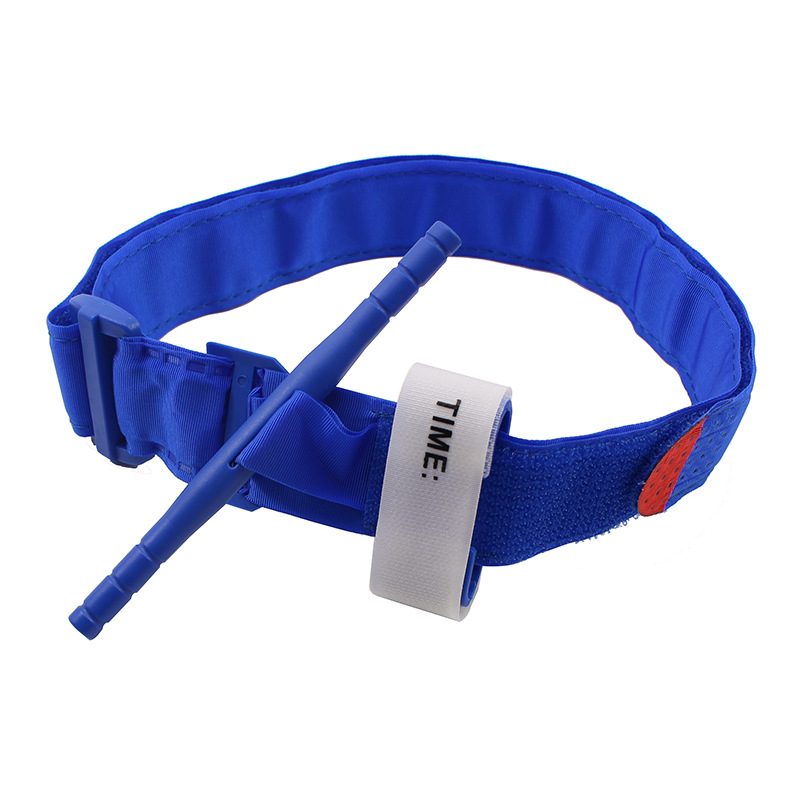
Tactical Rescue Military Tourniquet
Product Details
Product Details
Overview
The Tactical Rescue Military Tourniquet is a heavy-duty, windlass-style tourniquet engineered for rapid control of life-threatening extremity hemorrhage in tactical, combat, and emergency situations. Heavy-duty tactical design optimized for search and rescue, military operations, and high-risk emergency response. Following the "high and tight" principle, it completely occludes arterial blood flow to stop severe bleeding that cannot be controlled by direct pressure alone. Tested and trusted by military, law enforcement, and emergency response personnel worldwide.
Common Applications
- Combat casualty care (TCCC) — Standard hemorrhage control for battlefield extremity injuries.
- Law enforcement and active shooter response — Patrol officers and tactical teams carrying tourniquets for rapid intervention.
- Pre-hospital emergency care — EMS and paramedic use for severe traumatic bleeding from accidents, assaults, or disasters.
- Search and rescue / wilderness medicine — Remote area response where definitive care is far away.
- Workplace and industrial safety — High-risk environments such as construction, manufacturing, and forestry.
- Public access bleeding control — Placed in schools, malls, airports, and public buildings for bystander use.
How to Use
- Expose the wound — Cut or remove clothing to visualize the bleeding site. Apply direct pressure if possible while preparing the tourniquet.
- Position the tourniquet — Place it 2–3 inches (5–8 cm) above the wound, on bare skin. For arm injuries, use the upper arm; for leg injuries, use the upper thigh. Never place over a joint.
- Pull the strap tight — Pass the free end through the buckle and pull as tight as possible by hand. Fasten the strap back on itself.
- Twist the windlass rod — Rotate the rod clockwise to tighten until bleeding stops. Continue twisting until all bleeding is controlled (this will be painful for the patient).
- Secure the rod — Lock the windlass rod into the clip to maintain pressure. Wrap the remaining strap around the rod and secure the closure.
- Record the time — Note the exact time of application (write it on the patient's forehead if necessary) and communicate it to receiving medical personnel.
- Monitor and transport — Do not loosen or remove the tourniquet once applied. If bleeding continues below the tourniquet, apply a second tourniquet above the first. Transport to definitive care immediately.
Key Benefits
- Life-saving hemorrhage control — Proven to stop severe arterial bleeding that is otherwise fatal.
- One-handed application — Can be self-applied with one hand, critical for injured responders.
- Durable construction — Heavy-duty nylon strap and reinforced windlass withstand extreme conditions.
- Quick deployment — Can be applied in under 60 seconds with minimal training.
- Compact and lightweight — Easily carried in IFAKs, duty belts, or trauma kits without adding bulk.
Critical safety note: A tourniquet is a last-resort device for life-threatening extremity bleeding. Once applied, do not remove it — only trained medical professionals in a controlled setting should do so. Tourniquets left in place for extended periods may result in limb loss, but this is preferable to death from exsanguination. Always record and communicate the application time.
 English
 中文
中文 Español
 Français
 Deutsch
 Português
 日本語
日本語 Русский